

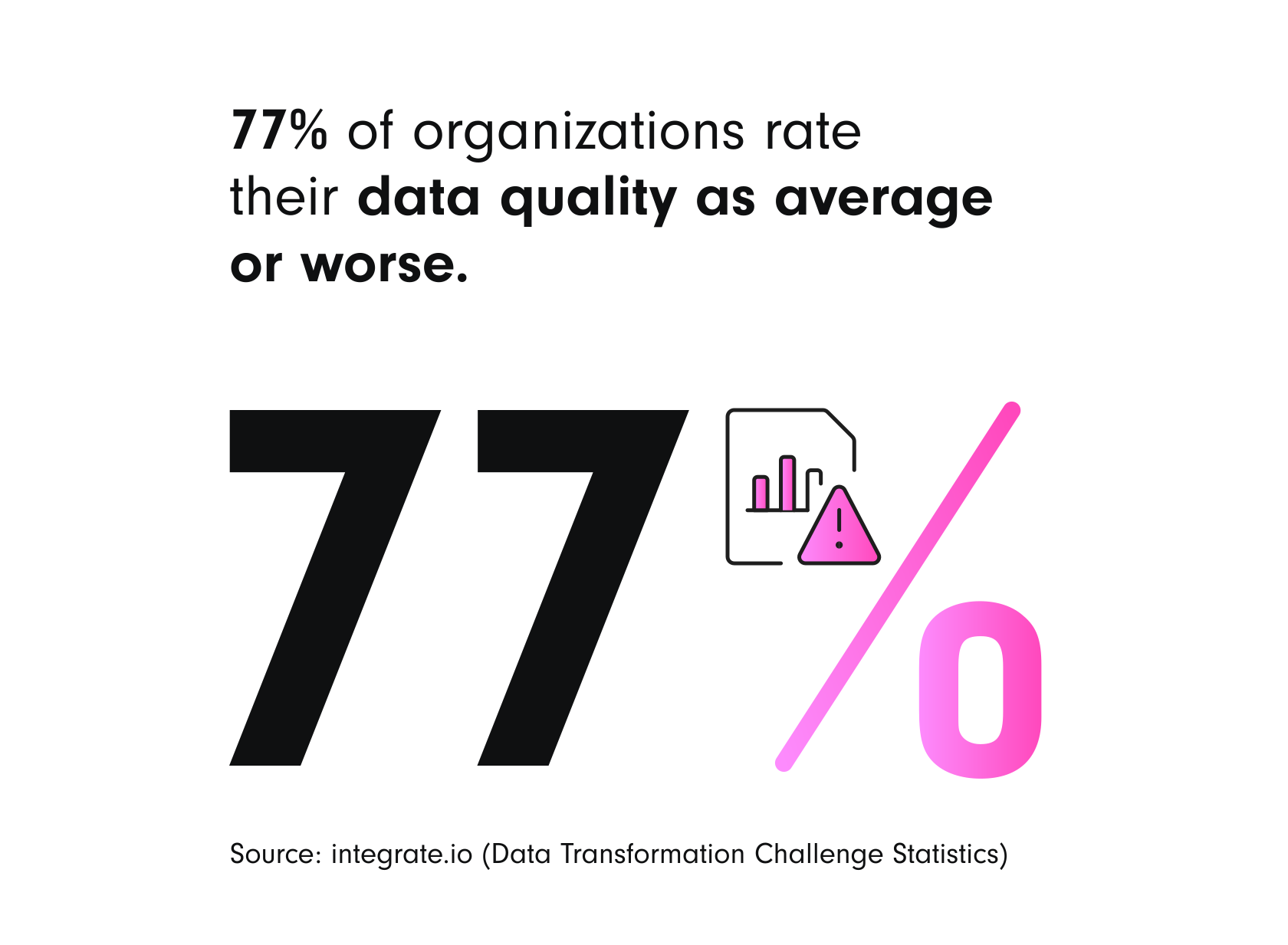
Whether in marketing, customer service, or administration—data quality today is the foundation of almost all digital processes. Nevertheless, many organizations still work with outdated, incomplete, or incorrect datasets. The result is inefficient workflows, poor decision-making, and ultimately, dissatisfied customers. According to a study by Gartner, poor data quality costs companies an average of $12.9 million per year. This makes it clear: data quality management is not a "nice-to-have" but a direct lever for efficiency, revenue, and service quality.
Good decisions require good data—and therefore measurably high data quality. This is precisely where the targeted use of artificial intelligence (AI) comes into play: AI can automatically check, clean, and enrich data. When combined with AI data pipelines, a continuous process for improving data quality is created.
In this article, you will learn:
-
Why data quality is the underrated cornerstone of successful AI and CRM initiatives
-
How AI measurably improves data quality – from cleansing and enrichment to specific use cases
-
How AI data pipelines can ensure data quality in the long term – for greater efficiency, revenue and data value
Contents
- Why data quality is a gamechanger
- How AI improves data quality (data cleaning & enrichment)
- Use cases: Where AI-based data quality has a measurable impact
- How to make it happen: Ensuring data quality with AI data pipelines
- Conclusion
 Why Data Quality Is a Gamechanger
High data quality means data is clean, complete, up-to-date, and consistent. This is the prerequisite for personalization, automation, and reliable decision-making. Nevertheless, data quality is often neglected in day-to-day operations—not due to a lack of interest, but because the challenges are complex:
- Data comes from different sources and systems
- Much of the information is unstructured (e.g., PDFs, emails, chat logs)
- Master data maintenance is often manual and error-prone
- Interfaces are inadequately connected or outdated
A real-world example:
A medium-sized B2B company wants to use AI to send out personalized newsletters. However, the quality of the CRM data is too low: 30% of contacts have no industry listed, and 10% have the wrong salutation. This leads to embarrassing errors, lower open rates, and undeliverable emails. The root cause: no consistent data quality management, no central data pipeline, and no automated data cleaning.

How AI Helps Improve Data Quality
The major advantage of AI-based solutions is that they improve data quality by automatically detecting patterns, inconsistencies, and anomalies—even where manual checks reach their limits. Modern AI data pipelines go far beyond traditional ETL processes: they combine data validation, data cleaning, and data enrichment into a continuous workflow.
- Structure unstructured data (e.g., from PDFs, emails, chat logs)
- Detect duplicates, incorrect entries, and outliers
- Fill in missing values through intelligent predictions (e.g., industry, region)
- Make relationships visible (e.g., through semantic mapping)
- Analyze data flow across system boundaries
Technological Background
The technologies used here include machine learning models, semantic search technologies, and natural language processing (NLP). Platforms such as Microsoft Power Platform (Power Automate), Make, n8n, or MuleSoft are employed.

Use Cases: Where AI-Based Data Quality Has a Real Impact
1. Public Administration
Problem: Citizens enter data differently when filling out online applications (street names, formats, name fields).
AI Solution: AI recognizes and standardizes spellings, supplements data via interfaces (e.g., civil registration systems), and detects duplicate entries.
Result: Faster processing, fewer follow-up queries, higher satisfaction.
2. E-Commerce / CRM
Problem: Customer data from different systems (shop, newsletter, support) is disconnected or contains gaps.
AI Solution: Automated data pipelines harmonize the information, identify purchasing patterns, and automatically enrich profiles.
Result: Personalized communication, better conversion, less wasted ad spend.
3. HR / Recruiting
Problem: Applicant data from emails, forms, and resumes must be transferred manually.
AI Solution: AI automatically extracts information (e.g., from PDFs), cross-references it, and transfers it into structured databases.
Result: Faster selection processes, less manual work, structured comparability.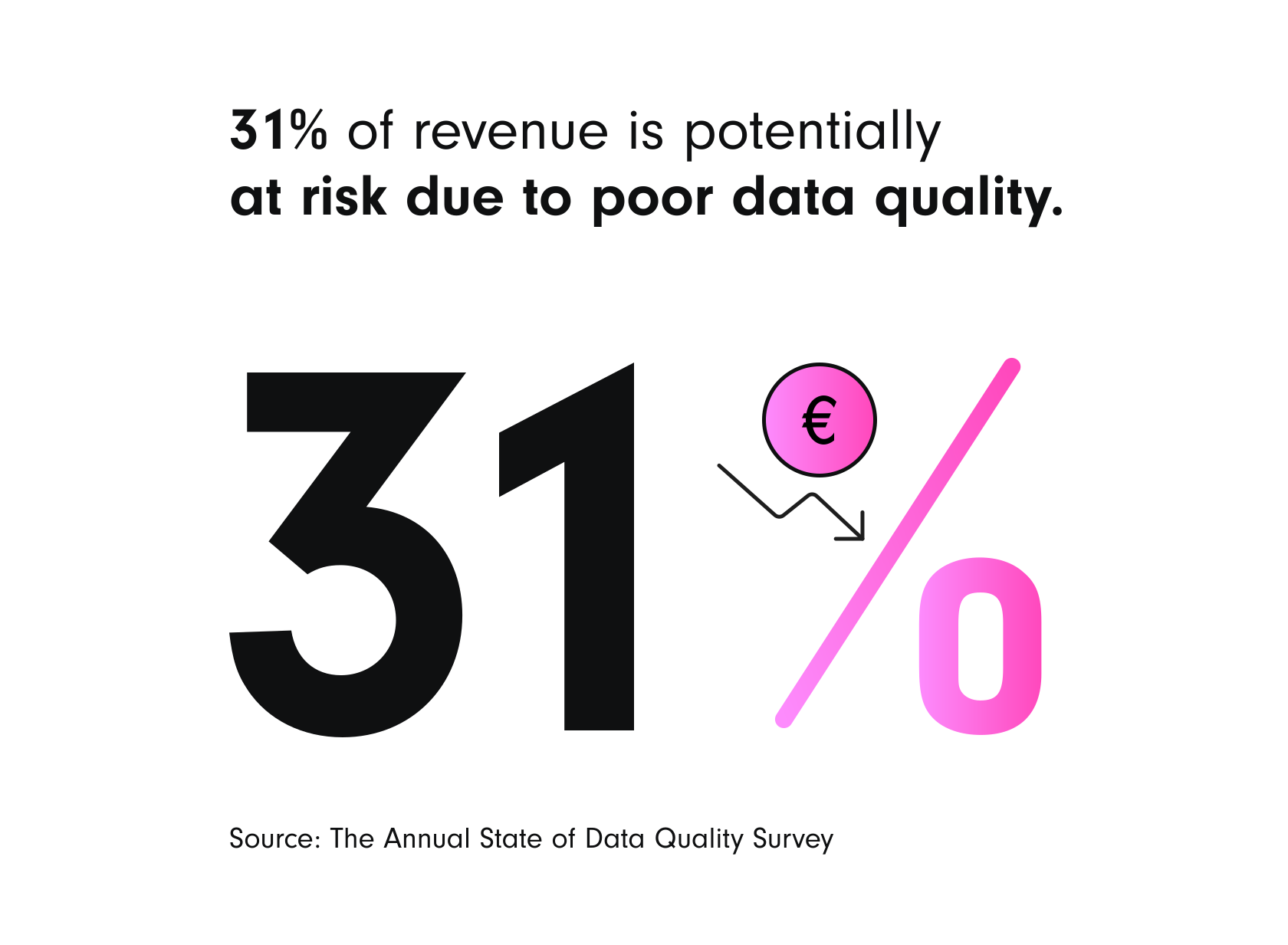

How to Make It Happen with AI Data Pipelines
Building an AI-powered data quality initiative typically follows these steps:
1. Analyze data sources: Which systems deliver which data—and in what condition?
2. Prioritize use cases: Which processes suffer the most from poor data quality?
3. Build an AI data pipeline: Define workflows and train models using tools such as Power Automate, n8n, or MuleSoft.
4. Automatically detect weak points: AI identifies duplicates, gaps, errors, and anomalies.
5. Plan for continuous improvement: Data quality is not a one-time effort—the pipeline must learn and adapt over time.

Conclusion: Using AI Smartly Saves Not Only Time – But Also Increases Your Data Value
Data quality is not an end in itself. It determines whether automation works, customers are satisfied, and decisions remain reliable. With AI and modern (AI) data pipelines, unstructured chaos becomes a manageable asset: data is checked, cleaned, standardized, and purposefully enriched. Those who address data quality early not only save costs – they also gain speed and room to maneuver.
Would you like to sustainably improve your data quality with AI?
We support you in enhancing your data quality – from analyzing your data sources, through data cleaning and data validation, to the implementation of scalable AI data pipelines (tailored to your tech stack).